Digitalisation
Digitalisation of services is a priority at NLB. Since 2012 we have introduced electronic statements, e-invoices and e-business with clients as part of our efforts to implement a "green office". We have also reduced the amount of paper used at meetings. Employees can only print their documents on shared printers, which are automatically set to print double-sided and in black and white.
Daily consumption of A4 sheets per employee
LISTA
Measures for the reduction of environmental burdens
VRV cooling systems have been installed in some of NLB d.d.’s branch offices. These save up to 45% of the electricity otherwise needed to cool the premises.
Raising awareness of rational use of sources
In 2015 as well, expert services were reminding the employees that everyone can contribute to more rational use of energy for heating. They recommended limiting the heating in winter to 20–22 °C, and the air conditioning in summer to above 25 °C. Our employees are aware that every degree above these recommendations results not only in a heavier carbon footprint, but also over 5% higher costs for heating and air conditioning.
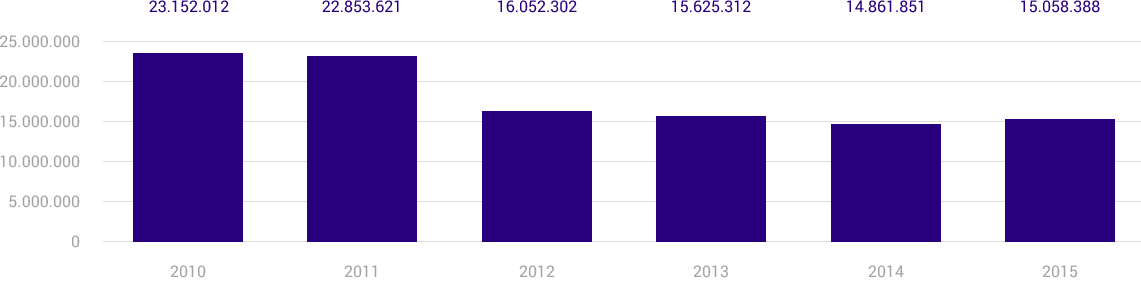
Power consumption
Compared to 2011, annual energy use fell by 32.6%, or around 7,500,000 kWh. At NLB d.d. alone, we have therefore prevented an average of approx. 1,400 kg of CO2 emissions from spilling into the environment every year. In 2015 consumption was 1.6% higher than in the previous year.
Waste
In 2015 we recycled the following
- 1.8 tons of wood (17 small trees)
- 6,500 kilowatt hours of energy
- 32,000 litres of water
- 200 kilograms of CO2 emissions
- 2.5 m³ of waste disposal space
- up to 440 kWh of energy
- 670 kg of CO2 emissions
- 1.1 tons of raw materials